
PFAS Pollution and the Role of Hemp in Environmental Remediation
As PFAS pollution continues to spread through water systems and agricultural soil in the UK, concerns about its health effects are increasing. In the effort to remove these chemicals from the environment, researchers are once again turning to an ancient solution: hemp.
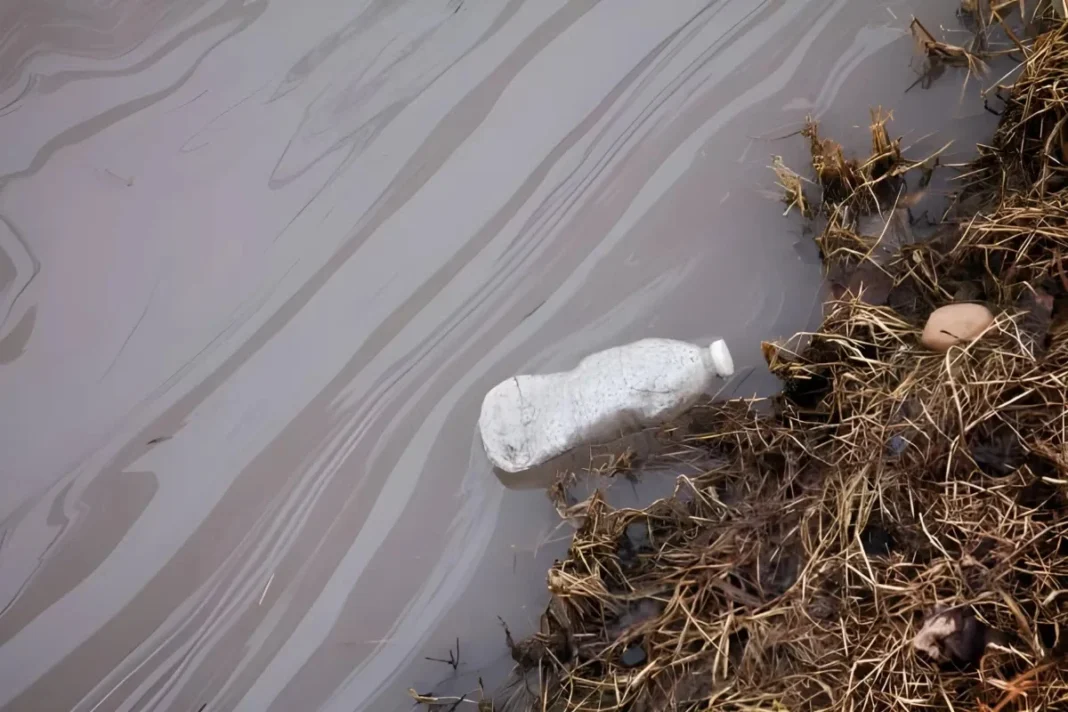
As if an increasingly hot and humid world were not challenging enough, another environmental crisis is emerging. PFAS – per- and polyfluoroalkyl substances – are now everywhere. They are in your raincoat, in your non-stick pan, and are increasingly being found in your drinking water. These synthetic chemicals, often called “forever chemicals” because they do not break down naturally, are now contaminating soil and water systems across the UK. A recent BBC review revealed how serious the problem is, with PFAS detected in water supplies and agricultural soil throughout the country.
The UK Environment Agency estimates that PFAS pollution affects thousands of locations across the country, from former firefighting training areas to industrial sites. Traditional clean-up methods such as excavation and incineration are not only expensive, but also disruptive and often impractical for large contaminated areas. This situation has sparked interest in an alternative that may be cheaper and more environmentally friendly: using plants to absorb chemicals from the soil. This is where the wonder crop, hemp, once again plays its part.
The problem with forever chemicals is that PFAS are a group of more than 4,000 synthetic chemicals that have been used since the 1940s in a wide range of products, from firefighting foam to food packaging. One of their strengths is their resistance to heat, water and degradation, yet this is also their weakness. Once released into the environment, these substances can remain for decades, and perhaps even for centuries.
These chemicals do not stop there; they accumulate in the human body and also in the food chain. Peer-reviewed scientific studies link PFAS exposure to serious health effects. These include an increased risk of cancer, immune system disorders, thyroid disease and reproductive problems. Research published in Environmental Health Perspectives shows that even low-level exposure can affect immune function and reduce vaccine effectiveness.
The problem is getting worse. As awareness increases, testing is now revealing PFAS contamination in locations that were previously unknown. Traditional remediation methods, such as digging up contaminated soil and either incinerating it at very high temperatures or storing it in special facilities, can cost millions of pounds for each location. For large agricultural areas or widespread pollution, these methods are simply impractical.
How Hemp Can Help
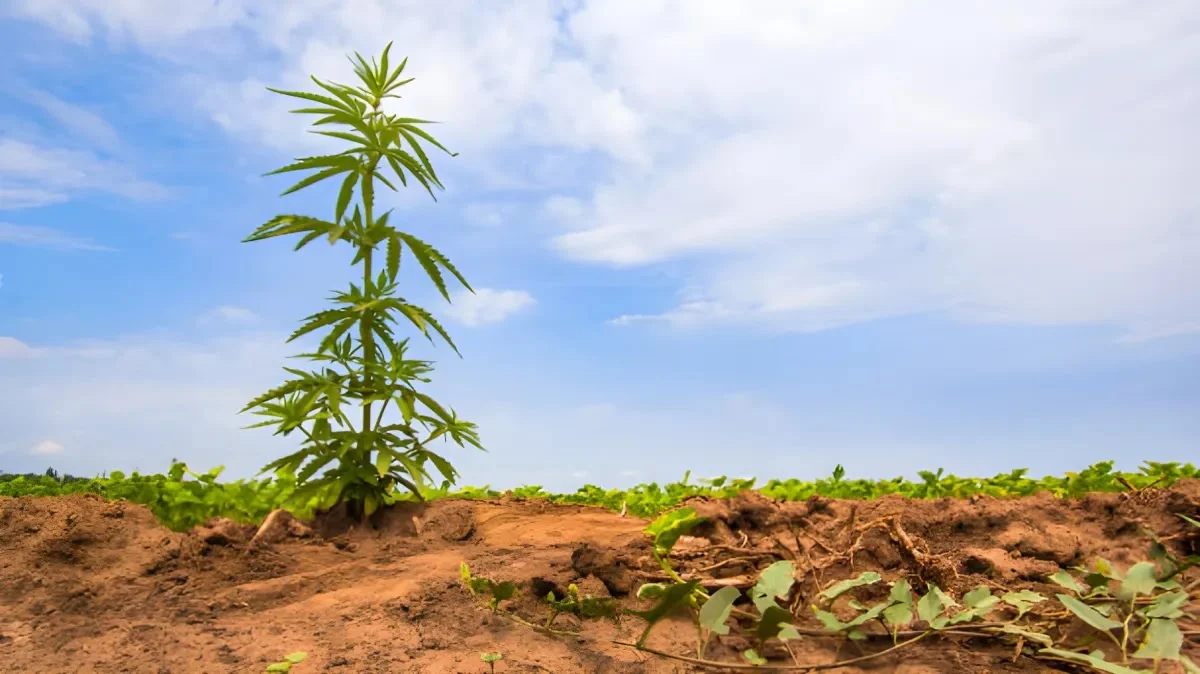
Hemp (Cannabis sativa) has demonstrated its ability to restore contaminated areas. This plant has been successfully used to remove heavy metals such as cadmium and lead from contaminated soil through a process known as phytoremediation. Hemp’s deep root system, rapid growth and high biomass production make it highly suitable for this task.
However, PFAS are different from heavy metals. These synthetic compounds are more complex, with different chain lengths and chemical structures. Some are absorbed by plants more easily than others. The question is: can hemp handle them?
Hemp showed potential as a solution for PFAS in a 2024 peer-reviewed study by Sara Nason and colleagues, published in the journal Chemosphere. The researchers tested the ChinMa hemp variety in PFAS-contaminated soil and found that the plant absorbed ten types of PFAS compounds. Interestingly, these compounds accumulated more in the leaves than in the stems.
The study produced modest but consistent results. Around 2 percent of PFAS was successfully removed from the soil in one growing season, especially in the root zone. The study also found that hemp was more likely to absorb short-chain PFAS, with three to four perfluorinated carbon atoms, than long-chain variants.
Results in Practice
Earlier work by the Micmac Nation in Maine also demonstrated the effectiveness of this method. In their 2020 pilot project, they used hemp on contaminated soil from a former air base. The results, described by researchers as “encouraging results with a need for greater caution,” were obtained over two years.
The most encouraging results came from a recent trial in Belgium conducted at Campus Vesta in Ranst. In this study, hemp phytoremediation was combined with biotechnology to treat contaminated soil in a firefighting training area. The project successfully achieved a 67 percent reduction in PFAS in just four months.
Here, nature was combined with a natural soil additive developed by the biotechnology company C-biotech. This additive works in two ways: it stimulates the growth of the hemp and willow trees planted in the area while increasing the bioavailability and mobility of PFAS compounds in the soil. It facilitates a process called PFAS molecule “chain shortening”, which breaks down long-chain compounds that are difficult to absorb and makes them easier for plants to take up. This accelerated phytoremediation method is said to speed up PFAS removal by up to 30 times compared with standard methods.
In this trial, initial PFAS levels ranged from 0.5 to 29 µg/kg – far above Belgium’s legal limit of 3.85 µg/kg for certain land uses. Within four months, PFAS concentrations in the harvested biomass increased to as much as 380 µg/kg, indicating significant extraction from the soil. “Hemp was so successful here that two-thirds of the treated area was effectively restored, and even in the remaining third, PFAS concentrations were too low for further research,” said project leader Erik De Bruyn.

The Waste Dilemma
Although phytoremediation has great potential for addressing this pollution, there is another challenge that must be faced. After hemp absorbs PFAS from the soil, the biological material containing PFAS remains. These difficult-to-destroy chemicals do not simply disappear; they only move from the soil into the plant.
However, this problem can in fact be solved, and there are also advantages. Hemp stems, which do not absorb PFAS in the same way as the leaves, can be safely reused for construction materials or fibre products. The leaves, where PFAS are more concentrated, must be destroyed through a controlled process to prevent the chemicals from returning to the environment.
One method used is hydrothermal liquefaction (HTL), which essentially works like pressure-cooking contaminated biomass to break down PFAS compounds. Nason’s study tested this method and found that it could break down PFAS residues. However, the researchers expressed concern that the process requires a great deal of energy and specialised equipment.
In the Campus Vesta trial, the contaminated biomass underwent hydrothermal treatment to destroy PFAS and produce biochar, creating a circular, carbon-negative remediation solution.
Limitations
Although hemp has once again proven itself to be a wonder crop that can help clean up human mistakes, we are not yet ready to solve the entire PFAS problem simply by planting a few crops.
With conservative results showing a removal rate of 2 percent per growing season, time can be an issue. For heavily contaminated sites, this timeframe could extend to several decades. Even the most optimistic projections acknowledge that multiple growing cycles are needed for meaningful remediation, and that is assuming conditions remain stable each year.
Hemp can clean up the mess we have created, but it will not solve the problem if we continue adding PFAS to consumer products and industrial processes.
Then there is the issue of selectivity. Hemp does not treat every type of PFAS in the same way. It is more effective at absorbing short-chain compounds, while the equally problematic long-chain compounds are absorbed less effectively. This means that sites contaminated with several types of PFAS may produce uneven results. Without additives, as used in the Belgian trial, some chemicals may be reduced while others remain, postponing the problem until the future.
It is still unclear how this solution will work on a large scale. So far, all successful trials have taken place only on small test plots in controlled environments. Whether this method can maintain its effectiveness across hectares of agricultural land or large industrial areas remains an open question. Different soil types, changing weather conditions and local environmental factors can all present major challenges.
Can Hemp Solve the PFAS Problem in the UK?
Hemp phytoremediation for PFAS is not a magical solution, but neither is it merely a fairy tale. Scientific studies show that this method is effective, just as it is for heavy metals. Hemp has even been used to remove radioactivity in the area around the Chernobyl nuclear disaster.
To make this technology practical in the UK, several important steps must be taken. First, more large-scale field trials are needed. This is essential for understanding how hemp works in different soil types, levels of contamination and growing conditions. The country also needs investment in infrastructure such as HTL for the safe management of contaminated biomass. In addition, regulatory changes are needed to remove restrictions that limit hemp cultivation.
Most importantly, we need to prevent new PFAS releases into the environment from the outset. Although hemp can help with clean-up, it will not solve the problem if we continue adding these substances to consumer products and industrial processes. Real progress requires clean-up and prevention efforts at the same time.
The continuing forever-chemical crisis cannot be solved by hemp alone. However, as part of a broader strategy, this ancient crop has the potential to become a solution to the persistent environmental challenge that we ourselves created.
Original article: CBD & Hemp Malaysia – Malaya Hemp™