What Is CBD? Introduction to Cannabidiol
Cannabidiol (CBD) is often a hot topic in the media, and you may have seen it recommended as an energy boost in your post-workout smoothie or morning coffee. You can even buy a sports bra formulated with CBD. But what is CBD, and why is it so popular? Let us explore it together.
What Is CBD and How Is Cannabidiol Different from Marijuana, Cannabis and Hemp?
What is CBD? CBD, or cannabidiol, is the second most abundant active ingredient found in cannabis (marijuana). Although CBD is an important component of medical marijuana, it is actually derived directly from the hemp plant, which is related to marijuana, or manufactured in a laboratory. CBD is one of hundreds of components in marijuana, but CBD itself does not cause intoxication or a “high”.
According to a report from the World Health Organization, “In humans, CBD exhibits no effects indicative of any abuse or dependence potential. To date, there is no evidence of public health-related problems associated with the use of pure CBD.” A recent study in the journal Neuropsychopharmacology concluded that “acute CBD use alone is unlikely to significantly impair daily functioning or workplace performance.” In other words, CBD is considered safe and does not present a risk of addiction. This research gives us confidence that using CBD will not interfere with our daily activities or productivity at work.
Is Cannabidiol (CBD) Legal?
CBD is now readily available in most areas of the United States, although its legal status continues to change. All 50 states have laws that legalise CBD, but with varying levels of restriction. In December 2015, the FDA relaxed regulatory requirements to allow researchers to conduct CBD clinical trials. Then, in 2018, the Farm Bill legalised hemp in the United States. This made efforts to keep CBD classified as an illegal substance almost impossible—as though oranges had been legalised while orange juice remained prohibited.
The Farm Bill removed all hemp-derived products, including CBD, from the Controlled Substances Act, which makes drug possession a crime. This means that, in principle, CBD is legal when derived from hemp but illegal when derived from cannabis (marijuana), even though the molecule is exactly the same. At present, many people obtain CBD online without requiring a medical marijuana licence, and this is legal in most states.
In the United Kingdom, CBD is legal as long as it is produced from licensed industrial hemp and contains less than 1 mg of THC per product, with additional regulation by the Food Standards Agency (FSA) for products placed on the market. In Malaysia, however, CBD remains under strict control through the Dangerous Drugs Act 1952, and its use is only permitted in certain research or medical treatment contexts with special approval from the authorities.
What Is CBD? Evidence for the Health Benefits of Cannabidiol
CBD is frequently promoted as a solution for various health problems. However, the strongest scientific evidence supports its effectiveness in treating some of the most difficult childhood epilepsy syndromes, such as Dravet syndrome and Lennox-Gastaut syndrome (LGS). These syndromes usually do not respond well to anti-seizure medication. In many studies, CBD reduced the number of seizures and, in some cases, stopped them completely. Epidiolex, which consists primarily of CBD, was the first cannabis-derived medicine approved by the FDA to treat these conditions.
Animal studies, self-reported experiences and human research suggest that CBD may also help with the following problems:
- Anxiety: Studies and clinical trials are exploring widespread reports that CBD may reduce anxiety. This is encouraging news for people who frequently feel anxious.
- Insomnia: Research suggests that CBD may help you not only fall asleep more easily but also remain asleep throughout the night. This is partly because CBD may help address chronic pain and anxiety that often disturb sleep.
- Chronic Pain: A growing number of human studies support claims that CBD helps manage pain. An animal study published in the European Journal of Pain suggested that CBD may help reduce the pain and inflammation associated with arthritis when applied to the skin. Other research has identified how CBD may inhibit inflammatory and neuropathic pain, which can be difficult to treat.
- Addiction: According to several human studies, CBD may help reduce cravings for tobacco and heroin under certain conditions. Animal models of addiction suggest that it may also help reduce cravings for other addictive substances such as alcohol, cannabis, opiates and stimulants.
Is CBD Safe to Use?
CBD is generally considered safe, but some side effects may occur. These include nausea, fatigue and irritability. CBD can increase the levels of blood-thinning medicines and other drugs in your bloodstream because it competes with the liver enzymes that break them down. This effect is similar to what happens when grapefruit is consumed with certain medicines. This interaction is particularly important if you take blood thinners, anti-epileptic medicines or immunosuppressants, as these medicines require stable levels in the bloodstream.
Taking high doses of CBD may cause abnormalities in liver-related blood tests. This is similar to an effect that can occur with many non-prescription medicines, such as acetaminophen (Tylenol). It is therefore important to tell your doctor if you use CBD regularly so that your liver enzymes can be monitored from time to time.
A significant safety concern surrounding CBD is that it is mostly marketed and sold as a supplement rather than as a medicine. The FDA does not currently regulate the safety and purity of dietary supplements, and in reality no one fully regulates the CBD market. You therefore cannot be certain that the product you buy contains the active ingredient at the dose stated on its label.
In addition, the product you purchase may contain other unknown elements. If you buy CBD, the safest approach is to ensure that independent laboratory testing has been verified through a COA, or Certificate of Analysis, which should accompany every CBD product. Check that the test is authentic to confirm the quality and safety of the product you use.
What Is CBD and How Do You Take It?
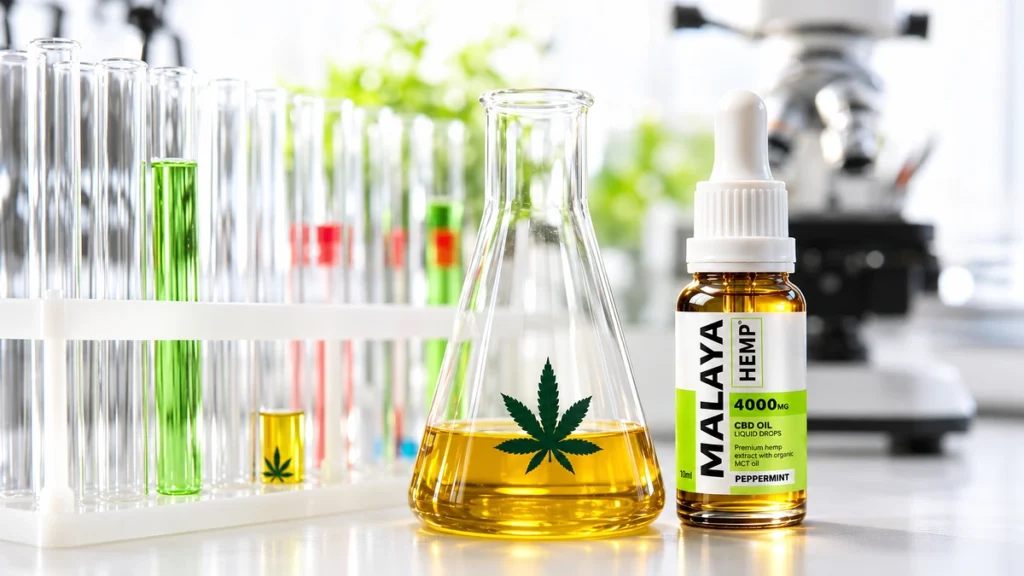
CBD is available in various forms, including oils, tinctures, capsules, patches, vapes and topical preparations for use on the skin. If you wish to reduce inflammation and relieve muscle or joint pain, a CBD-infused oil, lotion or cream—or even an aromatherapy bath product—may be the best option. Alternatively, a patch or tincture in the form of drops or a spray designed to be placed under the tongue allows CBD to enter the bloodstream directly. Some doctors do not recommend smoking or vaping any substance, including CBD.
Outside the United States, the prescription medicine Sativex, which uses CBD as an active ingredient, has been approved to treat muscle spasms associated with multiple sclerosis and pain caused by cancer. In the United States, Epidiolex has been approved to treat certain forms of epilepsy and tuberous sclerosis.
What Is CBD? Conclusion About Cannabidiol
Some CBD manufacturers have attracted the attention of authorities for making claims that have not been thoroughly investigated, such as stating that CBD is a cure for cancer or COVID-19, which is clearly untrue. Even so, more research is needed, and CBD shows potential as a useful and relatively safe option for managing problems such as anxiety, insomnia and chronic pain. However, without high-quality evidence from human studies, we cannot determine an effective dose. Furthermore, because CBD is commonly available as an unregulated supplement, it is difficult to know exactly what you are receiving or to conduct accurate research.
If you decide to try CBD, make sure you obtain it from a reliable source. Do not forget to discuss the use of CBD or any other supplement with your doctor. This is important to ensure that it does not interfere with or neutralise the effects of other medicines you are taking.