CBD vs THC: Which One Should You Use?
What Is THC?
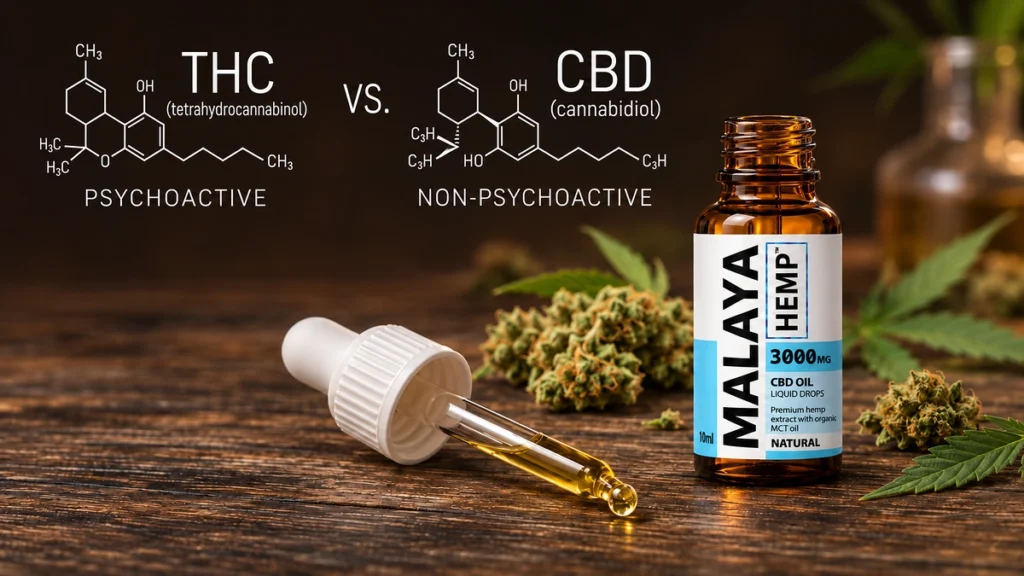
THC is the common term for tetrahydrocannabinol, a psychotropic compound found in cannabis. It is the component that causes users to feel “high” and experience euphoria. This relaxed feeling occurs when THC targets cannabinoid receptors in the brain. It affects functions such as coordination, pleasure and cognitive ability. THC also increases appetite by stimulating the hypothalamus, the part of the brain that sends hunger signals.
The unique properties of THC make it effective in reducing loss of appetite and nausea. This is why THC can be useful for cancer patients undergoing chemotherapy. Like CBD, THC also affects the brain, making it an option for headaches or migraines, depression, anxiety and insomnia. However, THC is illegal in most countries, while hemp and CBD are legal in many places.
Larger doses of THC mean that a person will become increasingly intoxicated. Excessive consumption carries risks. An excessive dose of THC may cause:
- Vomiting
- Dizziness
- Paranoia
What Is CBD?
CBD, or cannabidiol, is a non-psychotropic cannabinoid found in Cannabis sativa. Unlike THC, CBD users do not experience a “high” or euphoria. This is because CBD has little or no intoxicating effect on the brain or mind when it is used.
If you experience chronic body pain, choosing a cannabis strain with a high CBD content may be preferable. It does not prevent you from carrying out normal daily activities. For people living with chronic pain caused by illness, CBD is often recommended because it may reduce discomfort without affecting the ability to function normally.
CBD vs THC: The Main Differences
CBD vs THC compares two of the most commonly found cannabinoids, but the two are very different. CBD is not psychotropic, so it does not produce the “high” effect. THC, on the other hand, is a psychotropic cannabinoid that causes the euphoric state commonly experienced by users.
This occurs because THC binds to cannabinoid receptor 1 in the brain, changing how the brain functions and producing a “high”. Unlike THC, CBD does not bind directly to cannabinoid receptor 1. It therefore does not have the same psychotropic effect. CBD nevertheless has many positive effects on the body and mind. It may be used as an antidepressant or antipsychotic because of the way it responds to other receptors in the brain.
Physical Interaction of CBD vs THC
CBD and THC interact with the body in different ways. CBD acts indirectly, while THC plays an important role in activating the CB1 and CB2 receptors. THC can bind easily to CB1 receptors and stimulate the body. As a result, the following effects may occur:
- Fatigue
- Increased hunger
- Changes in the senses
- A feeling of calmness
CBD interacts with CB1 receptors indirectly through a process known as modulation. One of the main reasons CBD has become so popular is its ability to influence a wide range of receptors throughout the body.
Medical Uses of CBD vs THC
Although CBD and THC have many benefits and uses, these two cannabinoids are used in different ways. Their commonly described uses include:
CBD:
- Pain relief
- Anti-inflammatory effects
- Anti-anxiety effects
- Neuroprotective effects
- Anti-tumour effects
- Anti-seizure effects
THC:
- Relieving muscle tension
- Stimulating appetite
- Euphoria and relaxation
- Anti-emetic effects
- Pain relief
- Drowsiness and sleep
What Is the Entourage Effect?
The entourage effect occurs when natural components from the plant interact together with the body to produce a stronger influence. This influence is stronger than when one of those components is used on its own. It is a synergistic effect created when multiple compounds are combined in their natural state. The result is considered a multiplied effect rather than merely the total of each separate effect.
The entourage effect can make the whole plant more effective in addressing medical symptoms. It can be understood more clearly by comparing the effects of THC, the psychotropic compound in the cannabis plant, with the effects of using the whole plant.
How Does CBD Work Without THC?
Many people wonder whether they can use cannabis without THC. The answer is yes, and the results can be very encouraging. This can be reassuring for people who wish to experience the benefits of cannabis without the feeling of euphoria caused by THC.
CBD oil contains important minerals and vitamins, fatty acids, chlorophyll, fibre, protein and flavonoids. CBD without THC has produced remarkable results for thousands of users.
CBD vs THC: Which One Should You Choose?
THC and CBD each have a range of benefits, and it can sometimes be difficult to determine which is more suitable. The choice depends on personal preference and the reason for using THC or CBD. The legal status of both compounds must also be considered when making a decision.
In most countries, the use of cannabis and THC is restricted, while the use of pure CBD is less tightly controlled. People who want the euphoric effect known as a “high” usually look for cannabis products containing THC. In contrast, people who wish to use cannabis purely for medical benefits while avoiding intoxication should look for products containing only CBD.
Is CBD Better Than THC?
It cannot be stated conclusively that CBD is better than THC. The cannabis plant affects every person differently. Factors such as genetics, history of drug use and personal expectations play an important role in determining an individual’s choice.
Studies indicate that THC has much stronger potency than CBD. Interestingly, research has also found that CBD’s lower potency may mean that it has limited clinical benefits.
No single component of the cannabis plant can be labelled absolutely good or bad. A great deal more research is therefore needed before stating that CBD is better than THC. The most important point is that CBD has very few side effects. Apart from some people reporting dry mouth, the side effects of CBD are minimal compared with the clinical benefits it offers.
THC, on the other hand, has more side effects, including anxiety and paranoia. CBD may be used in relation to psychotic disorders, while THC cannot replace CBD in efforts to reduce psychotic disturbances.
CBD vs THC: Conclusion
When used together, these two cannabinoids may be used for a wide range of illnesses. For example, a combination of CBD oil and THC may be used for depression, migraines and arthritis. It is better not to assume that either THC or CBD is superior to the other, but to use each one for its intended purpose. This approach allows the benefits of these cannabinoids to be understood more fully.