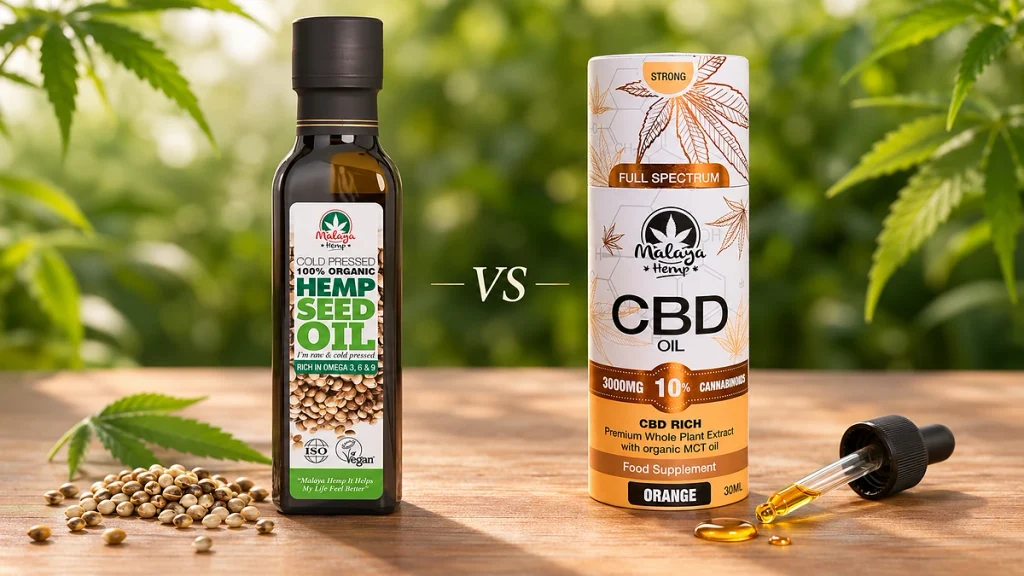
Hempseed Oil vs CBD Oil: Benefits of Hemp Oil for Skin
Hempseed Oil vs CBD Oil begins with how each oil is produced. Hempseed oil is often known as “hemp oil,” and it is produced by cold-pressing hemp seeds. Hemp oil is usually unrefined and has a clear green colour. Its taste may resemble a nutty flavour.
It differs from cannabidiol (CBD) oil, which is an extract from the cannabis plant and uses hemp flowers and leaves in its production.
Hempseed oil is produced from the hemp seeds themselves and usually does not contain THC (tetrahydrocannabinol), the component that causes psychoactive effects. However, this is often widely debated. According to a 2017 study, CBD oil may also contain very low and insignificant levels of THC.
Hemp oil has various health benefits, including those that can improve skin health. Its speciality in maintaining healthy skin lies in its nourishing vitamin content and remarkable moisturising properties.
Hempseed Oil vs CBD Oil: How Does Hemp Oil Benefit Your Skin?
Hempseed oil offers various skincare benefits that you can obtain either by using it directly on the skin or by taking it as a supplement:
Controls Skin Oil Production
Hemp oil is an ideal choice for most skin types because it can moisturise without clogging your pores. It can even help balance oily skin by providing the moisture it needs and controlling oil production on the skin.
Dry skin can cause excessive oil production, and this can stimulate the formation of acne. Hemp oil can prevent dry skin without clogging the pores. This helps reduce acne caused by excess oil.
Moisturises and Relieves Inflammation
One of the omega-6 fatty acids found in hemp oil is gamma-linolenic acid (GLA). GLA acts as a highly effective anti-inflammatory agent while encouraging skin growth and the formation of new cells.
This may help relieve inflammation and irritation of the skin, including acne and several conditions such as psoriasis, while ensuring the skin remains nourished and moisturised.
Treats Atopic Dermatitis
One reason hempseed oil is so beneficial for the skin is that it is rich in omega-6 and omega-3 fatty acids. Consuming these nutrients may help treat skin problems such as atopic dermatitis.
One randomised crossover study using a method in which participants did not know which treatment they received found evidence that dietary hempseed oil reduced the symptoms and appearance of clinical atopic dermatitis after 20 weeks.
Has Anti-Ageing Properties
Besides moisturising and soothing the skin, hemp oil also has anti-ageing properties. Hemp oil may help reduce fine lines and wrinkles, as well as prevent signs of ageing from appearing.
The linoleic acid and oleic acid found in hemp oil cannot be produced by our bodies. However, both acids play an important role in skin health and slowing the ageing process. They are therefore important nutrients that should be included in our daily diet.
Hempseed Oil vs CBD Oil: How Is Hemp Oil Used?
There are several ways you can obtain skin benefits from hemp oil.
This oil can be applied directly to the skin to relieve dryness, soothe redness or reduce inflammation. It is easily absorbed without leaving an excessively greasy feeling, making it suitable as a daily moisturiser, especially for sensitive or problematic skin.
In addition, hemp oil can also be mixed with essential oils or other natural ingredients such as aloe vera gel to enhance its soothing and anti-inflammatory effects. This method is often used in a night-time skincare routine or after exposure to sunlight.
Oral use allows the nutrients in hemp oil to support skin health from within, making the skin healthier and more radiant overall.
Hempseed Oil vs CBD Oil: Topical Use of Hemp Oil
The first method you can try is applying hemp oil directly to your skin. This method is particularly effective if you experience skin irritation or want to relieve dry areas of skin immediately.
Before using the oil, try a patch test to ensure that you do not experience an unwanted reaction:
- Clean and dry a small area on the upper part of your arm, such as the bend of the elbow.
- Apply a small amount of pure hemp oil to the area. If you are using the hemp oil and essential oil mixture described below, test it in a separate place from the pure oil and at a different time.
- Cover the area with a bandage and leave it for 24 hours, making sure that the bandage does not come into contact with water. If there is any redness, burning, itching or other irritation, this indicates that you may be sensitive to the oil and should not use it.
- If you experience a reaction, remove the bandage immediately and wash the area with soap and water.
- If no visible or felt reaction occurs, the oil may be safe to use.
- If you are using hemp oil to treat acne and want to apply it topically, apply the oil directly to clean skin and leave it for one to two minutes before rinsing it off with warm water.
Hempseed Oil vs CBD Oil: Essential Oil Mixture
You can also mix hemp oil with other anti-inflammatory and soothing ingredients. Here is a recipe you can try, which can be applied directly to the skin:
- 1/4 cup of hemp oil
- 2 teaspoons of melted coconut oil. It can be melted in a microwave by placing the required amount in a microwave-safe container and heating it in 30-second intervals, stirring between each interval, until completely melted.
- 4 to 5 drops of an essential oil that is good for the skin, such as lavender or rosemary oil.
Note: Essential oils such as lavender or rosemary oil are only suitable for external use and must be mixed with other ingredients. Never use them internally because most are toxic.
Hempseed Oil vs CBD Oil: Oral Use of Hemp Oil
The second method of using hemp oil is to swallow it. This not only provides benefits to the skin, but also adds benefits to your overall health, just like using the oil topically. When you take hemp oil orally, the risk of experiencing skin irritation or acne is reduced. However, it should be remembered that it may cause slight temporary digestive discomfort.
Discuss it with your doctor before taking hemp oil orally.
If taking it orally, you may take 1 to 2 teaspoons each day, either all at once or divided into two doses.
If you do not like the original taste of hemp oil, do not worry. You can use it in a variety of interesting recipes. One way is to mix it into foods such as smoothies, salad dressings or soups. You can also use it for cooking. This way, you can still enjoy its benefits without having to compromise on taste.
Hempseed Oil vs CBD Oil: What Are the Side Effects and Risks?
Hempseed oil is generally safe for most people to use and usually does not contain THC or psychoactive properties. However, this is often debated. Enjoy your meal with this unique and healthy sauce option.
When using hemp oil topically, some people may experience slight irritation. It is therefore wise to try it on a small area of skin first. This is important whether you are using pure hemp oil or hemp oil mixed with essential oils. This way, you can make sure that it is compatible and safe for your skin before using it more widely.
Taking hempseed oil may cause several negative side effects in some people.
The most common side effect is mild diarrhoea or digestive discomfort, which may occur because of the oily and fatty nature of the oil. To avoid this problem, start by taking a small amount of hemp oil each day and gradually increase the amount. Hemp seeds can interact with blood-thinning medicines and potentially inhibit platelets. Therefore, before taking hempseed oil regularly, discuss it with your doctor to make sure it is suitable for you. In conclusion, whether used topically or taken orally, hempseed oil offers various benefits for skin health. Many people can benefit from these advantages.
Hemp oil is considered safe for most people to use, and it may help moisturise the skin from the inside out.
Start with only 1/2 to 1 teaspoon of hemp oil a day before increasing the dose further.
Hempseed Oil vs CBD Oil: A Unique Source of Healthy Fats
Hempseed oil contains an ideal omega-6 to omega-3 ratio of around 3:1, a ratio recommended by nutritionists to support skin health and balanced bodily functions. According to the Journal of Dermatological Treatment, these essential fatty acids can improve the function of the skin’s protective layer, reduce transepidermal water loss (TEWL), and help retain moisture naturally. A low TEWL means the skin is better able to retain moisture and respond to environmental pressures such as hot weather, chemicals and pollution.
Potential Protection from UV Radiation and Oxidative Damage
A study from Pharmacognosy Review found that hemp oil contains antioxidants such as vitamin E and phenols, which may help reduce the negative effects of UV radiation on the skin. These antioxidants act to protect skin cells from oxidative stress, one of the main causes of premature ageing. Regular use of hemp oil therefore has the potential to help reduce dark spots, uneven skin tone and signs of sunburn.
Supports the Skin Microbiome and Accelerates the Recovery of Minor Wounds
Hemp oil also shows potential in supporting the skin microbiome, the ecosystem of beneficial bacteria that protects the skin from infection and inflammation. A study in the International Journal of Molecular Sciences suggests that the balance of fatty acids in hemp oil may help reduce the growth of pathogenic bacteria such as Staphylococcus aureus, which is often associated with acne and eczema. This content also encourages the production of natural ceramides, an important component in skin cell repair and the recovery of minor wounds.
Hempseed Oil vs CBD Oil: Hemp, Skin and New Hope
Hempseed oil is not only a natural moisturiser; it is a complete support system for our skin. With its unique fatty acid content, active antioxidants and potential to restore the function of the skin barrier, this oil offers more than ordinary moisture. In the modern skincare world, natural ingredients that support internal and external balance are becoming increasingly important, and hemp is emerging as a major player that is rarely promoted fairly.
Unlike cosmetic ingredients that are loaded with preservatives and aggressive active chemicals, hemp shows that skincare can also be gentle yet effective through natural recovery. In fact, compared with other ingredients in the skincare world, hemp has one major advantage: it works in harmony with the physiology of our skin instead of forcing it to change suddenly.
Hemp oil is not simply a trend. It is one of the oldest solutions newly rediscovered by modern science. For users who understand the value of natural ingredients supported by science, it is not a matter of “what is new,” but “what truly works.”