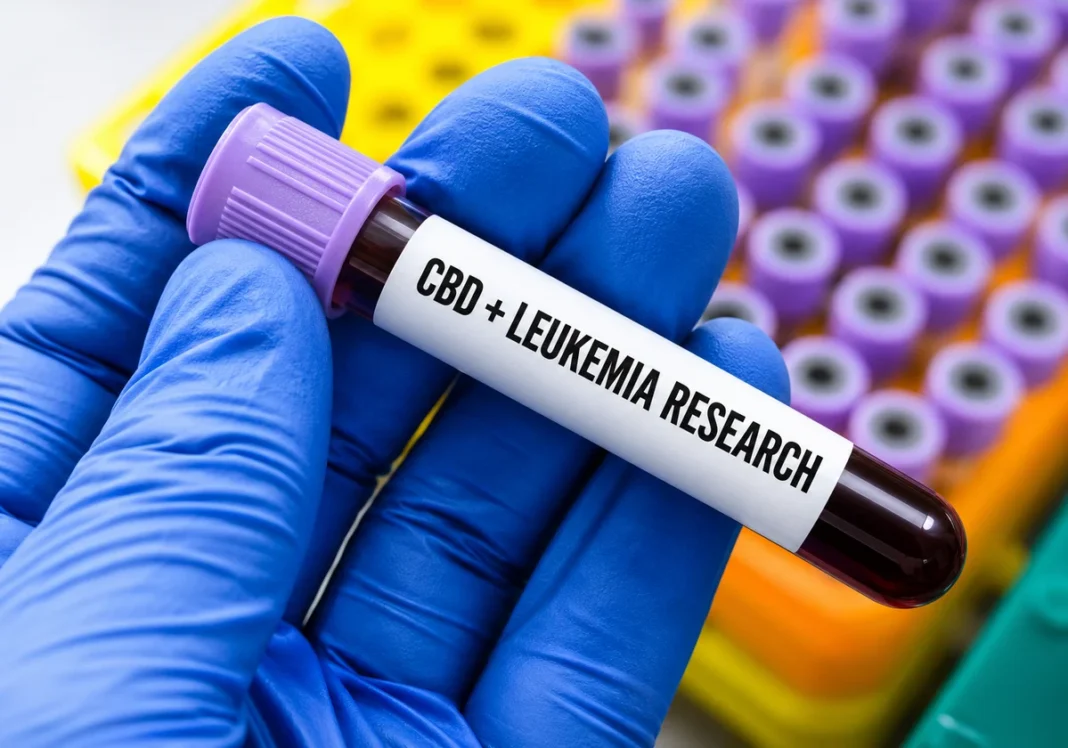

CBD for leukemia has attracted scientific interest because cannabidiol can influence several cellular pathways connected with cell survival, oxidative stress and programmed cell death. Leukemia is a group of blood cancers that affect blood-forming tissues, including the bone marrow and lymphatic system. Different forms of leukemia behave differently, which means research findings must be interpreted according to the exact cell type and experimental model involved.
Researchers have examined CBD in models of acute lymphoblastic leukemia, acute myeloid leukemia, chronic myeloid leukemia and chronic lymphocytic leukemia. The most significant findings involve cannabinoid receptors, mitochondrial activity, calcium regulation, reactive oxygen species and apoptosis. This article explains seven important findings from research into CBD for leukemia.
Table of Contents
1. Why Researchers Study CBD for Leukemia
Cannabinoids interact with a complex network of receptors, enzymes and signalling molecules throughout the body. The best-known receptors are CB1 and CB2. CB1 is found mainly in the nervous system, while CB2 is more strongly associated with immune cells and blood-forming tissues. CBD does not bind strongly to these receptors in the same manner as THC, but it can influence the endocannabinoid system indirectly and act on several additional cellular targets.
Because leukemia develops within blood-forming and immune-related cells, scientists have investigated whether cannabinoid signalling can affect leukemia cell growth and survival. Research into CBD for leukemia has therefore focused on how cannabidiol changes intracellular communication rather than viewing CBD as a simple substance that attaches to one receptor and destroys a cancer cell.
2. Cannabinoid Receptors in Leukemia Cells
A 2016 study examined cannabinoid receptor expression in samples from 107 people with chronic lymphocytic leukemia, commonly called CLL. The researchers found that cannabinoid receptors CB1 and CB2 were overexpressed in CLL cells when compared with healthy B cells. Higher CB1 expression was also associated with established high-risk markers.
However, receptor abundance alone did not determine how the cells responded to cannabinoids. When primary CLL cells were exposed to cannabinoids, cell viability decreased in a dose-dependent manner, but healthy cells were also affected. The biological response was found to be independent of CB1 and CB2 expression. This demonstrates why the presence of large numbers of cannabinoid receptors cannot, by itself, prove that a cannabinoid will selectively target leukemia.
Earlier work examining bone marrow samples also identified CB1 and CB2 receptors on neoplastic lymphocytes in CLL. These findings established cannabinoid receptors as relevant biological markers and possible research targets, while also showing that the receptor system is more complicated than a direct “lock and key” mechanism.
3. CBD for Leukemia and Programmed Cell Death
Apoptosis is the organised process through which the body removes damaged or unnecessary cells. Leukemia cells can avoid the signals that normally trigger apoptosis, allowing abnormal cells to survive and multiply. A major area of CBD for leukemia research examines whether cannabidiol can reactivate these death pathways in selected leukemia cell models.
A laboratory study published in 2006 reported that CBD reduced cell viability and induced apoptosis in human leukemia cells. The researchers observed activation of caspase-8, caspase-9 and caspase-3, together with changes in mitochondrial membrane potential and the release of cytochrome c. These are important components of the cellular machinery involved in programmed cell death.
The same research connected the response with increased reactive oxygen species and changes involving the proteins Nox4 and p22phox. Reactive oxygen species can act as signalling molecules, but high levels can damage cellular structures and contribute to cell death. The findings offered a possible explanation for how CBD altered survival signals within the experimental leukemia cells.
4. CBD May Affect Mitochondria and Calcium Regulation
Mitochondria produce cellular energy and help regulate calcium balance and apoptosis. Research involving T-cell acute lymphoblastic leukemia, known as T-ALL, found that CBD acted directly on mitochondria and disturbed their ability to handle calcium.
At the concentrations used in the experiment, CBD caused mitochondrial calcium overload, opening of the mitochondrial permeability transition pore and cell death. The T-ALL cell lines were highly sensitive, whereas resting healthy T cells showed lower sensitivity in that particular model. The observed effect did not depend on cannabinoid receptors or calcium-permeable channels at the cell surface.
This study expanded the scientific understanding of CBD for leukemia by showing that cannabidiol can influence intracellular structures directly. It also underlined that CBD may operate through different mechanisms depending on the leukemia subtype and cellular environment.
5. CBD Can Alter Leukemia Cell Signalling
More recent laboratory research has examined how CBD changes gene expression and signalling inside chronic myeloid leukemia cells. Transcriptomic analysis of K562 cells identified changes in genes connected with oxidative stress, p53-mediated apoptosis, immune signalling, lipid metabolism and mitochondrial balance.
Another study using a CBD-rich Cannabis sativa extract reported dose-dependent inhibition of proliferation in K562 chronic myeloid leukemia cells. The researchers observed activation of caspases 3 and 7, reduced mitochondrial membrane potential and release of cytochrome c.
Research published on Jurkat T-ALL cells has also examined CD47, a surface protein that helps cells avoid removal by immune cells. CBD exposure reduced CD47 expression and induced apoptosis through a mechanism involving VDAC-1 oligomerisation. Together, these experiments show that the relationship between CBD for leukemia and cell survival involves several connected pathways rather than one universal receptor.
6. CBD Does Not Directly Produce Healthy Blood Cells
Claims sometimes state that cannabinoids promote the production of healthy white blood cells, red blood cells and platelets. The leukemia studies discussed above did not demonstrate that retail CBD oil restores healthy blood-cell production in people. Blood formation, known as haematopoiesis, is a complex process controlled by the bone marrow, growth factors, immune signals and the underlying leukemia itself.
A reduction in cultured leukemia-cell activity is not equivalent to rebuilding healthy bone marrow. Any assessment of white blood cells, haemoglobin or platelets requires clinical blood tests interpreted by a hematology team. This distinction is essential when explaining laboratory findings accurately.
7. What Human Evidence Shows About CBD for Leukemia
Most direct anticancer findings involving CBD for leukemia come from cultured cells, primary cell samples or animal models. Human clinical evidence is limited. A phase II study administered a single combined THC/CBD dose to 23 patients with indolent leukemic B-cell lymphomas. Leukemic B cells decreased temporarily in the bloodstream, but normal B cells and T cells also decreased, the effect disappeared within 24 hours and apoptosis was not detected.
CBD has separately been examined after allogeneic stem-cell transplantation in relation to graft-versus-host disease. That research addressed a transplant complication rather than CBD killing leukemia cells. These are different clinical questions and should not be combined into a claim that CBD oil treats leukemia.
Standard leukemia treatment is selected according to the exact diagnosis, genetic findings, disease stage, age and overall health. Options can include chemotherapy, targeted medicines, immunotherapy and stem-cell transplantation. Laboratory observations involving CBD do not establish a replacement for these treatments.
CBD Quality and Medicine Interactions
CBD can affect liver enzymes responsible for processing medicines. This creates the possibility of interactions with anticancer medicines, anti-sickness drugs, pain medicines, anticoagulants and other treatments. Anyone receiving leukemia treatment should have potential interactions reviewed by an oncology pharmacist or hematology team before using CBD.
Product quality also matters. Accurate cannabinoid content, transparent ingredients and independent laboratory testing help distinguish a properly documented product from one with unreliable labelling. Readers can learn more through the CBD laboratory report guide and the Malaya Hemp CBD education guide.
Conclusion: What Researchers Say About CBD for Leukemia
Research into CBD for leukemia has produced important laboratory findings. CBD has induced apoptosis in selected leukemia cell lines, altered mitochondrial calcium regulation, affected oxidative-stress pathways and changed signals connected with cell survival. Studies have also confirmed that cannabinoid receptors are present in leukemia cells, although receptor expression does not reliably predict a selective response.
The clearest scientific conclusion is that CBD is a biologically active compound with multiple effects in experimental leukemia models. Its mechanisms differ between leukemia subtypes, and current human data do not establish retail CBD oil as a leukemia treatment. Accurate reporting should preserve the promising cellular findings while clearly separating laboratory activity from demonstrated clinical outcomes.
Research Sources
- Cannabidiol-induced apoptosis in human leukemia cells
- CBD, mitochondria and calcium homeostasis in acute lymphoblastic leukemia
- Cannabinoid receptor expression in chronic lymphocytic leukemia
- Clinical effects of a single cannabinoid dose in leukemic B-cell lymphoma
- US National Cancer Institute: Cannabis and Cannabinoids